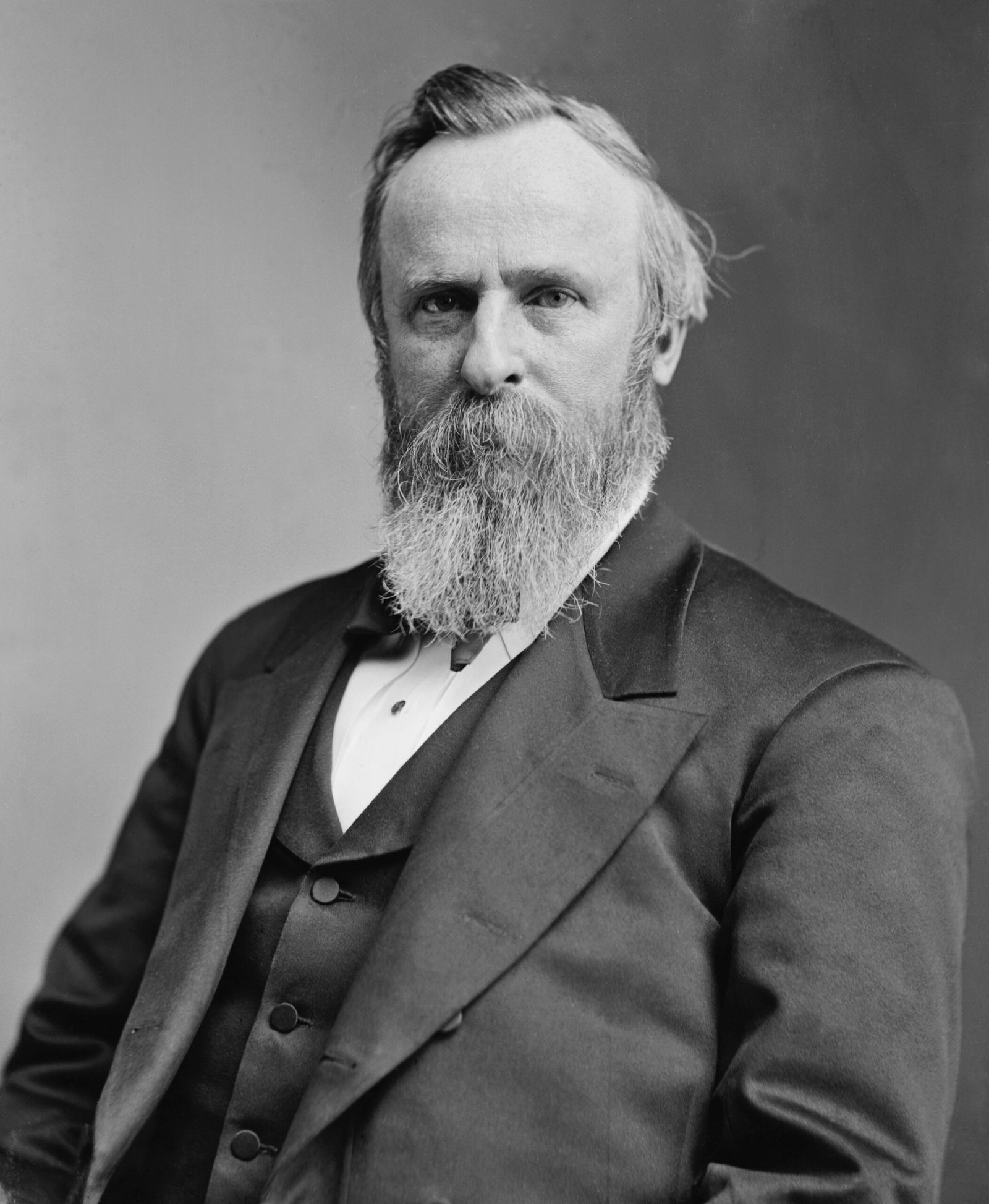
Rutherford B. Hayes: The Compromised Victory That Ended Reconstruction and Began Reform
Rutherford Birchard Hayes served as the 19th President of the United States from March 4, 1877, to March 4, 1881. A Republican and former Union officer and Ohio governor, Hayes took office with William A. Wheeler as his vice president. His four‑year term is best known for resolving the most disputed presidential election in U.S. history, withdrawing federal troops from the remaining Reconstruction governments in the South, and advancing administrative reforms that anticipated the later Pendleton Act. presidency.ucsb.edu
The 1876 Election and the Compromise that Resolved It
The presidential election of 1876 pitted Republican Rutherford B. Hayes against Democrat Samuel J. Tilden. Tilden won a plurality of the popular vote, but the results in several Southern states were contested. Congress established a 15‑member Electoral Commission to adjudicate disputed returns; the commission’s decisions awarded the contested electoral votes to Hayes, producing an 185–184 electoral outcome. The highly charged resolution and behind‑the‑scenes bargaining, often summarized as the Compromise of 1877, led to concessions that included withdrawal of federal troops from the South and federal attention to Southern internal improvements. archives.gov
Cabinet and Key Advisers
Hayes appointed a cabinet of established Republicans and reform‑minded figures. William M. Evarts served as Secretary of State, and John Sherman as Secretary of the Treasury; Sherman was central to Hayes’s financial program. Carl Schurz, a prominent advocate of reform, was Secretary of the Interior and a key partner in Hayes’s civil‑service initiatives. George W. McCrary (and later Alexander Ramsey) held War; Charles Devens was Attorney General; Richard W. Thompson was Secretary of the Navy; and David M. Key served as Postmaster General. Hayes’s selections balanced sectional reconciliation, administrative competence, and a cautious approach to partisan bosses. history.state.gov
Major Domestic Policies
Ending Reconstruction: One of Hayes’s earliest and most consequential acts was to remove federal troops from Louisiana and South Carolina in April 1877. That step completed the national withdrawal that historians commonly mark as the end of Reconstruction. The result restored “home rule” to Southern white Democrats and ushered in a period of political disenfranchisement and segregation for African Americans across much of the region. Hayes framed the decision as a political necessity to restore peace after a contentious election, but its long‑term effects on civil and voting rights were profound. presidency.ucsb.edu
Civil‑service reform: Frustrated by the spoils system, Hayes sought to reduce partisan patronage. He issued executive measures that forbade federal officeholders from being compelled to contribute to political campaigns and pressed for competitive examinations and merit principles—most visibly in actions to reform the New York Custom House. His administration’s efforts produced contentious fights with party bosses in the Senate but established precedents and initial administrative structures that later fed into the Pendleton Act (1883). en.wikipedia.org
Monetary policy: Hayes supported “hard‑money” policies and resisted inflationary measures. The administration oversaw the scheduled resumption of specie payments redeeming paper currency in gold on January 1, 1879, a development that restored confidence in U.S. credit. However, it also intensified sectional economic tensions over silver and currency availability. Congress overrode Hayes’s veto of the Bland‑Allison Act (1878), which required limited coinage of silver; Hayes had opposed large expansions of silver coinage. elections.harpweek.com
Foreign Affairs
Hayes’s foreign policy was largely cautious, aimed at preserving commercial ties and treaty obligations. A prominent episode involved immigration and China: Congress passed restrictive measures in the late 1870s that threatened existing treaties. Hayes vetoed legislation that would have unilaterally abrogated the Burlingame Treaty, arguing that treaty obligations should be renegotiated through diplomacy; negotiations culminated in the Angell Treaty (1880) and, later, in legislation that ultimately limited Chinese immigration. The dispute produced strong regional political backlash and contributed to intense domestic debate. rbhayes.org
National Crises and Government Response
The Great Railroad Strike of 1877 was the largest industrial uprising of the era. As violence and disruption spread across several states, Hayes ordered federal troops in July 1877 to protect the mail and restore order where state authorities could not do so. The use of regular troops to break strikes alarmed labor and shaped federal practice: presidents would later invoke similar authority in industrial disputes. Hayes emphasized restraint, but his actions established a pattern of federal intervention to maintain public order and property. guides.loc.gov
Important Laws and Administrative Acts
Important measures during Hayes’s term included enforcement of the Resumption Act’s timetable (specie resumption on January 1, 1879) and Congress’s passage of the Bland‑Allison Act over his veto. Hayes also signed appropriations and pension legislation that expanded some veteran benefits. Administratively, Hayes’s executive orders and appointments changed hiring practices in major revenue and postal offices and set precedents for national civil‑service institutions. elections.harpweek.com
Controversies and Political Conflict
Several controversies marked Hayes’s presidency. The 1876 election left durable charges of illegitimacy and “stolen” victory; the negotiated settlement that produced his presidency implicated him in decisions that critics say sacrificed Black political power in the South. Hayes’s clashes with Republican machine politicians—most notably over patronage at the New York Custom House and the removal of Chester A. Arthur’s allies—brought fierce Senate opposition. His veto of anti‑Chinese legislation won plaudits in the Northeast and denunciations in the West, and his labor‑era use of troops alienated many workers. Historians weigh Hayes’s ethical aims and administrative improvements against the political costs of some of these decisions. history.house.gov
Historical Assessment and Legacy
Historians view Hayes as a transitional leader. He sought to restore public confidence after the scandals of the Grant years, pursued civil‑service reform and fiscal stability, and attempted modest reconciliation between North and South. Yet his willingness to end Reconstruction and to withdraw federal enforcement left African Americans in the South vulnerable to disenfranchisement and segregation for decades. In administrative terms, Hayes’s policies and personnel choices advanced merit principles and curbed partisan patronage, influencing later reformers. His decision to honor a one‑term pledge also shaped contemporary perceptions of presidential service and restraint. archives.gov
Sources
- National Archives — 1876 Electoral College
- Library of Congress — Presidential Election of 1876: A Resource Guide
- Rutherford B. Hayes Presidential Library & Museums — Overview of the Hayes Presidency
- The White House (Presidential Archives) — Rutherford B. Hayes
- U.S. Department of the Treasury — John Sherman (Secretary of the Treasury)
- Miller Center — Hayes Administration
- Library of Congress — The Great Railroad Strike of 1877
Smart shopping starts here.
If you enjoyed this article, explore our curated products designed for everyday living.
📱 Download the Dralys App
🛍️ Shop now: www.DralysStore.com