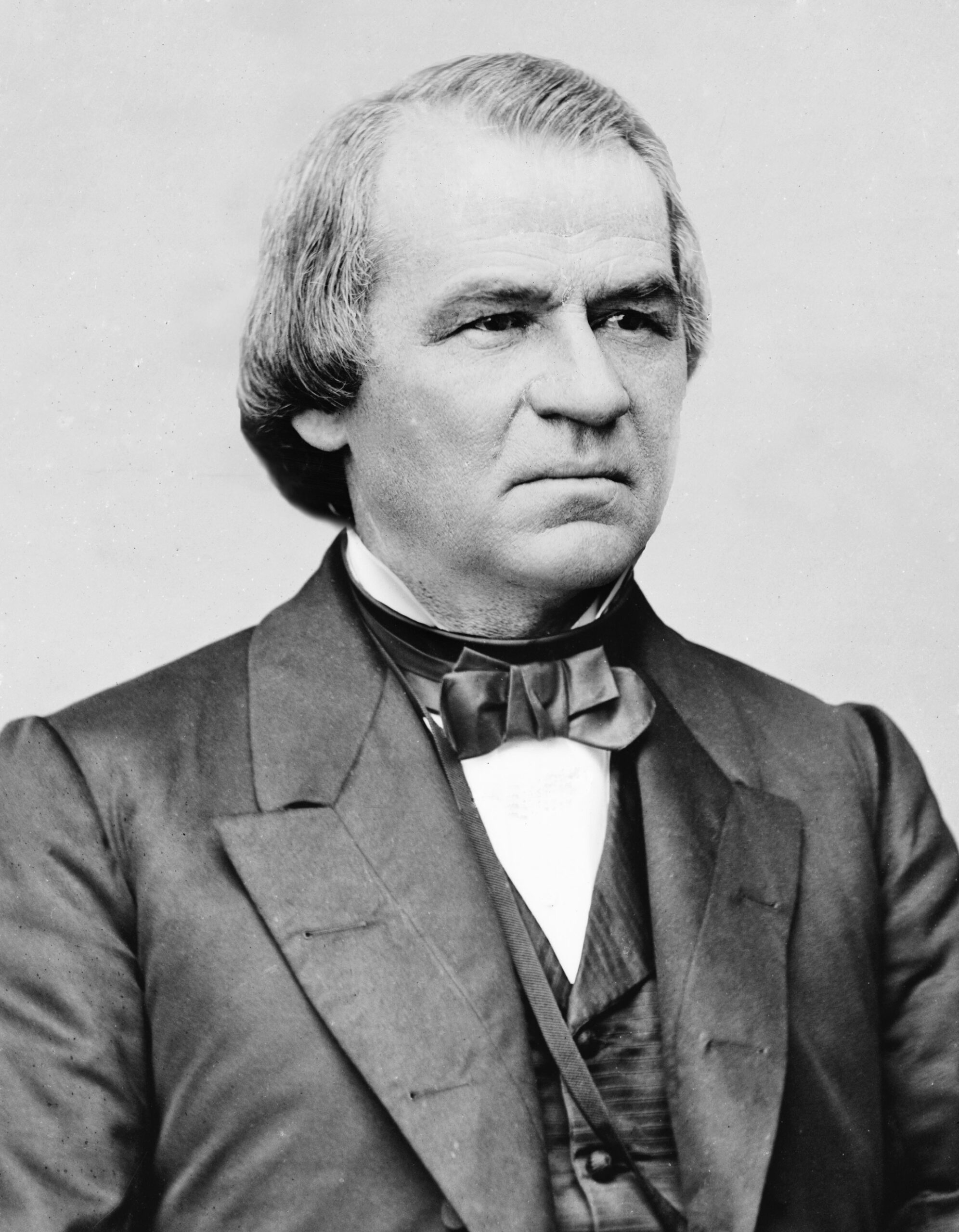
Andrew Johnson: Presidency, Reconstruction, and a Contested Legacy
Overview and dates in office
Andrew Johnson served as the 17th President of the United States from April 15, 1865, to March 4, 1869, assuming the office upon Abraham Lincoln’s assassination. He had been elected vice president on the 1864 National Union ticket and succeeded to the presidency less than a month into Lincoln’s second term. During his presidency he faced the immediate task of guiding the nation after the Civil War and during the early years of Reconstruction. archives.gov
Party affiliation, vice presidency, and election context
Johnson was a Southern Democrat and a War Democrat who had been chosen as Lincoln’s running mate in 1864 to broaden the wartime National Union coalition. He was Lincoln’s only vice president; after Lincoln’s assassination there was no vice president during Johnson’s tenure. The 1864 Lincoln–Johnson ticket defeated Democratic nominee George B. McClellan in an election shaped by wartime politics and the newly instituted soldier absentee ballot. obamawhitehouse.archives.gov
Key Cabinet figures
Johnson retained several senior officials from Lincoln’s administration. William H. Seward continued as secretary of state and managed major diplomatic matters, including the Alaska negotiations. Edwin M. Stanton remained secretary of war and became a central figure in the president’s conflicts with Congress. Hugh McCulloch served as secretary of the treasury, and Henry Stanbery held the attorney-general’s office during part of Johnson’s term. Frictions within the cabinet—especially over Reconstruction policy and control of the War Department—contributed directly to the constitutional crisis that followed. millercenter.org
Reconstruction approach and major domestic policies
Johnson favored a rapid, relatively lenient restoration of the Southern states: presidential pardons and the restoration of property rights for many former Confederates were hallmarks of his approach. He opposed federal efforts to guarantee civil and political rights for formerly enslaved people when those efforts went beyond limited wartime measures. That disagreement with the Republican-controlled Congress produced repeated vetoes by the president and ultimately broad congressional action to impose a different course for Reconstruction. teachingamericanhistory.org
Important laws, vetoes, and congressional overrides
Civil-rights and Reconstruction legislation defined the legislative record of the era. Congress passed the Civil Rights Act of 1866 and then sustained its provisions by overriding Johnson’s veto—one of the first major laws enacted over a presidential veto in American history. In 1867 Congress enacted the Reconstruction Acts, creating military districts in the former Confederacy and conditioning readmission of states on new constitutions and protections for the rights of citizens; Johnson vetoed those measures but Congress overrode his vetoes. The Tenure of Office Act, passed by Congress on March 2, 1867, further restricted the president’s power to remove certain officeholders without Senate approval; that statute later became central to Johnson’s impeachment. visitthecapitol.gov
Foreign affairs and diplomacy
On foreign policy, Secretary of State William H. Seward negotiated the 1867 treaty to purchase Alaska from Russia; President Johnson signed the treaty and presided during its approval and transfer process. The administration also pressed diplomatically against French intervention in Mexico, where Napoleon III had placed Archduke Maximilian as emperor; diplomatic pressure and the shifting balance of power after the Civil War helped produce a French withdrawal by 1867. These actions helped reassert U.S. influence in the hemisphere after the Civil War. history.state.gov
National crisis: impeachment and the 1868 trial
The partisan and constitutional clash between Johnson and the Republican Congress culminated in the House’s adoption of articles of impeachment in early 1868. The immediate trigger was Johnson’s removal of Secretary of War Edwin Stanton and his attempt to appoint a successor in ways that, Congress said, violated the Tenure of Office Act. The Senate conducted a trial in the spring of 1868; Johnson was acquitted when the Senate fell one vote short of the two-thirds majority required to convict and remove him from office. The impeachment episode marked the first presidential impeachment in U.S. history and left unresolved questions about executive removal power that would be litigated and debated afterward. history.house.gov
Major controversies presented neutrally
Controversies over Johnson’s administration fall into several categories. Critics point to his leniency toward former Confederates, his frequent vetoes of civil-rights legislation, and public statements that opposed measures to secure African Americans’ political equality—actions that, historians argue, undermined efforts to protect newly freed people. Supporters and some contemporaries defended Johnson’s commitment to strict presidential authority and rapid restoration of civilian government. The impeachment trial itself remains a focal point for debate about congressional power, the scope of presidential authority, and political motive; historians continue to weigh legal and political factors in assessing the case. archives.gov
Election context after Johnson and immediate political consequences
Johnson did not secure broad national support for a second full term. In 1868 Ulysses S. Grant won the presidency against Democrat Horatio Seymour in an election held amid Reconstruction politics and the newly expanded electorate in the South, where many freedmen voted under congressional Reconstruction measures. Grant’s victory and the composition of the new Congress allowed a continuation of Radical Republican policies that Johnson had resisted. presidency.ucsb.edu
Historical legacy and scholarly assessment
Historians generally view Andrew Johnson’s presidency as consequential but deeply contested. Many modern surveys and scholarly appraisals rank Johnson low in presidential performance, citing his clashes with Congress and his opposition to federal protections for the rights of formerly enslaved people; at the same time, historians note that his actions shaped constitutional and political developments during Reconstruction, including congressional assertion of authority and subsequent legal debates about removal power and civil-rights enforcement. Scholarly assessments underscore both the immediate impact of his policies after the Civil War and the long-term consequences for Reconstruction’s trajectory. static.c-span.org
Conclusion
Andrew Johnson’s presidency bridged the Civil War and the longer era of Reconstruction. His tenure featured landmark legislation, sustained conflict with Congress, a presidential impeachment trial, and diplomatic initiatives such as the Alaska purchase. That combination of urgent national tasks and polarized politics produced a contested record that continues to provoke study and debate among historians, legal scholars, and the public. teachingamericanhistory.org
Sources
- National Archives and Records Administration
- Library of Congress
- United States Senate (Impeachment materials)
- White House Historical Association
- Miller Center, University of Virginia
- Office of the Historian, U.S. Department of State
- The American Presidency Project (UCSB)
- U.S. House of Representatives, History, Art & Archives
- National Park Service (Andrew Johnson National Historic Site)
Smart shopping starts here.
If you enjoyed this article, explore our curated products designed for everyday living.
📱 Download the Dralys App
🛍️ Shop now: www.DralysStore.com


