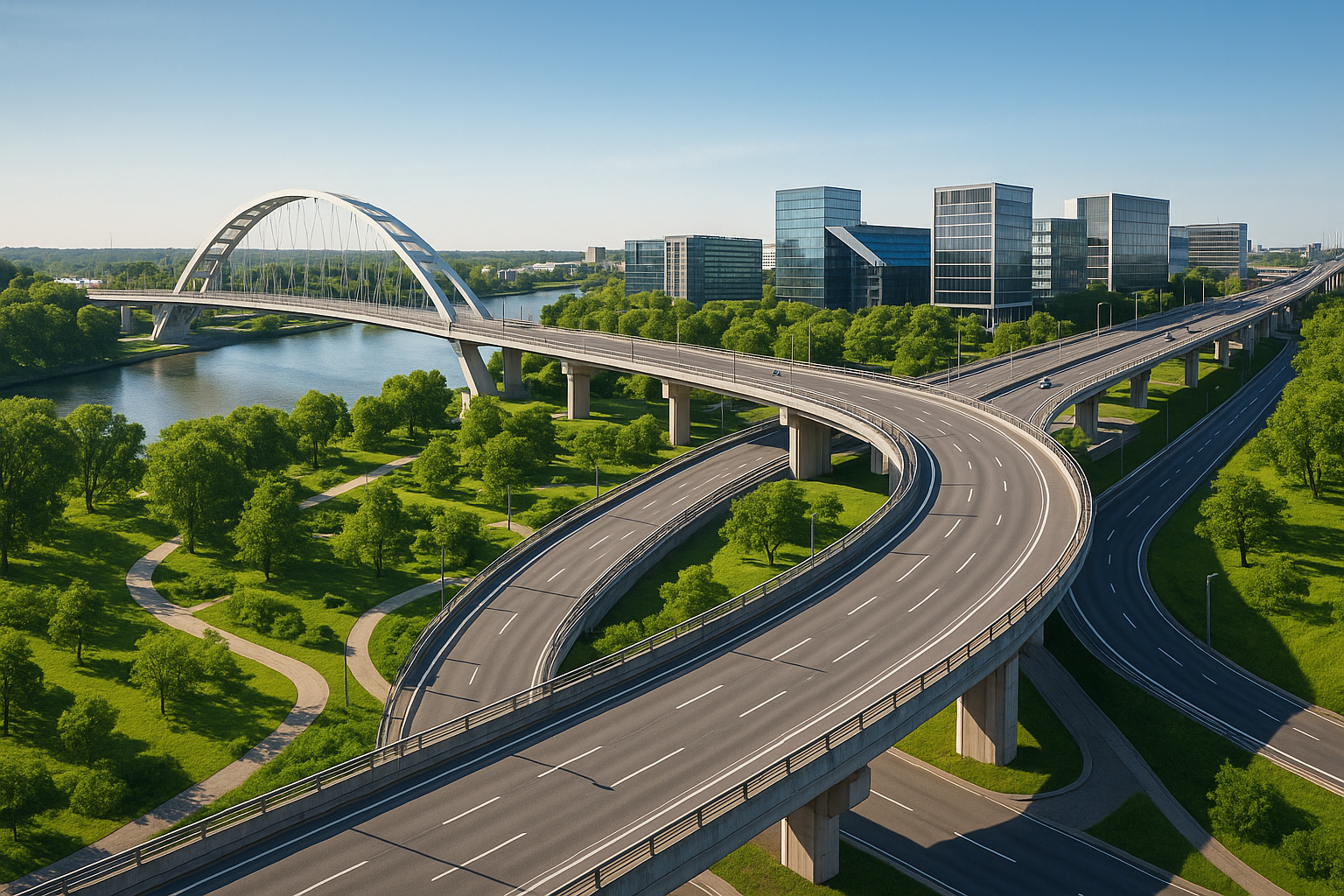
Each week, the Dralys Research Digest curates pioneering civil engineering studies and emerging professional themes, providing a strategic lens on the future of infrastructure, sustainability, and design innovation. Our goal is to translate complex research into actionable knowledge for engineers, designers, educators, and project owners seeking practical insights.
Progressive Materials and Green Infrastructure
The civil engineering community has renewed its focus on sustainable materials that reduce environmental impact without compromising structural integrity. Recent research explores the potential of geopolymer concrete, which replaces traditional Portland cement with industrial byproducts such as fly ash or slag. This approach not only cuts greenhouse gas emissions during production but also leverages waste materials, aligning with circular economy principles.
A practical example is the use of geopolymer overlays in highway rehabilitation projects. These overlays have demonstrated enhanced durability in harsh climates while reducing carbon footprints. Designers and project owners can consider such materials to meet evolving regulatory requirements and stakeholder expectations focused on sustainability.
Digital Twin Technologies Transforming Project Delivery
Digital twin technology continues to expand beyond concept models into dynamic, responsive tools for asset management. Tightly integrated with sensor networks and real-time data analytics, digital twins offer complete lifecycle visibility—from design through operations. This innovation supports predictive maintenance, reduces downtime, and optimizes resource allocation.
For example, a recent deployment in a large urban bridge project enabled engineers to monitor stress responses under varying traffic conditions in real time. This facilitated proactive reinforcement strategies rather than reactive repairs, demonstrating cost savings and enhanced public safety.
Resilience and Adaptation in Infrastructure Design
Climate adaptation is now a foundational consideration in civil engineering design. Cutting-edge research focuses on resilient infrastructure capable of withstanding extreme weather, seismic activity, and rising sea levels. Engineers are adopting an interdisciplinary approach, integrating data from climate science, urban planning, and social systems.
New methodologies emphasizing flexible design criteria, modular construction, and multi-hazard risk assessment are influencing project specifications globally. A practical case includes elevated flood barriers coupled with permeable pavements in coastal city developments, which reduce flood risks while enhancing water infiltration and urban cooling.
Future-Proofing Skills for the Global Engineering Workforce
As civil engineering evolves rapidly, professionals must embrace continuous learning and digital literacy. Research-driven education platforms and virtual collaborations are making global knowledge exchange more accessible. Emphasizing skills like data analytics, AI applications, and sustainability assessment is critical to align workforce capabilities with industry demands.
Students and early-career engineers can leverage augmented reality (AR) training modules that simulate complex construction scenarios, improving problem-solving and project management skills before entering the field. Project owners benefit by partnering with teams proficient in these emerging technologies to ensure innovation and resilience.
The weekly Dralys Civil Engineering Digest strives to bridge research and practice, inspiring innovation and informed decision-making across the global civil engineering community. By staying connected to cutting-edge developments, our readers are empowered to build safer, greener, and more resilient infrastructure for tomorrow.
Smart shopping starts here.
If you enjoyed this article, explore our curated products designed for everyday living.
📱 Download the Dralys App
🛍️ Shop now: www.DralysStore.com