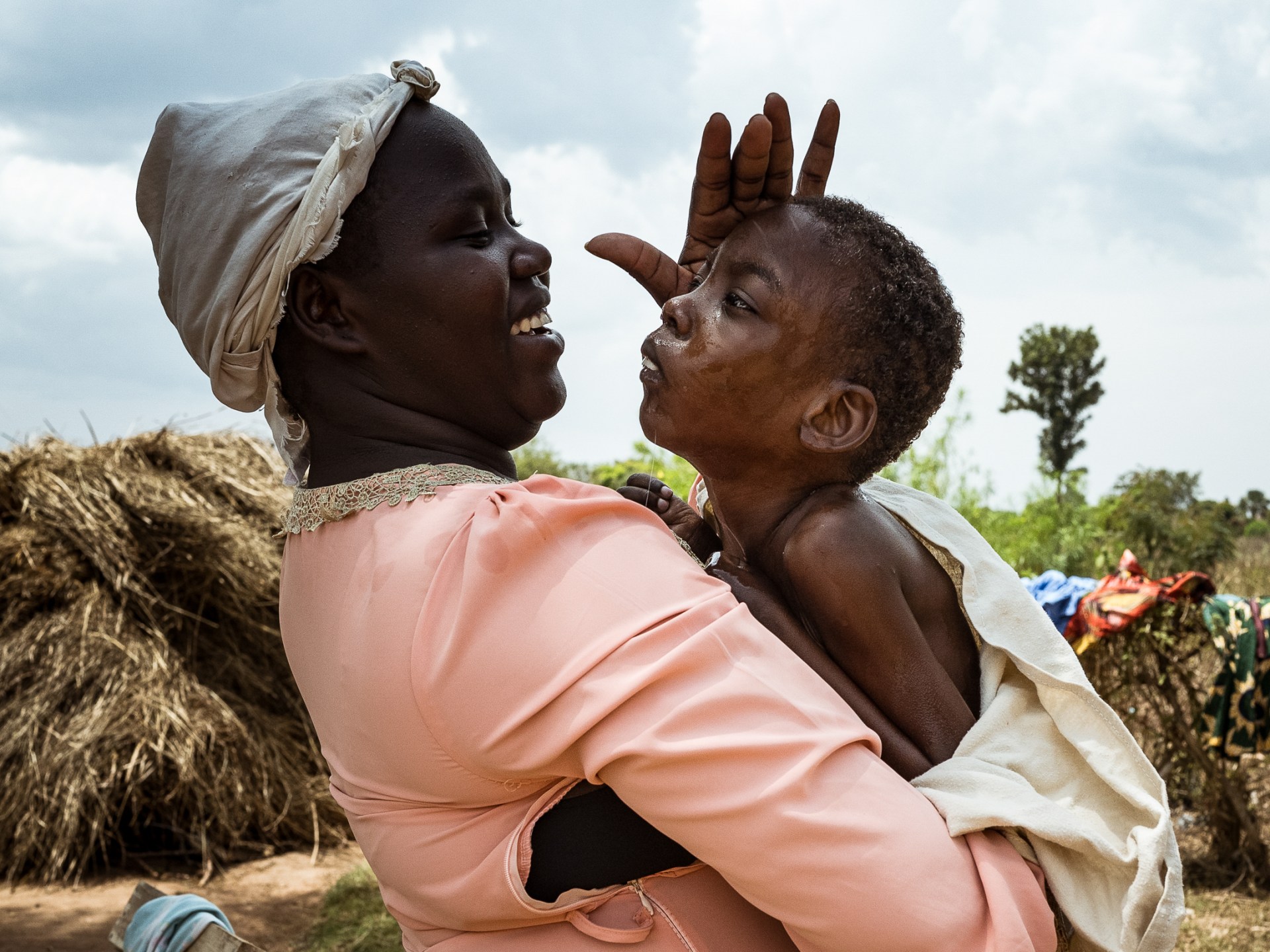
A Portrait of Resilience: Martha Apolot’s Journey in Owalai, Uganda
In the quaint village of Owalai, Uganda, the atmosphere is permeated with both the promise and the struggles of rural life. Here, under the unforgiving sun, Martha Apolot, a determined 21-year-old mother, exemplifies the complexities of leadership in an environment often devoid of resources. With a hoe resting against one shoulder and her eight-year-old son, Aaron, balanced on the other, Martha navigates the dual challenges of agricultural labor and motherhood.
Martha’s daily routine is a testament to her unwavering resolve. Each morning, she prepares her young son for a trek to the fields, where the dual duties of nurturing a child and cultivating crops intertwine. “Aaron is so weak, so I have to carry him from the house and lay him somewhere so I can work,” she confides, her voice laced with quiet strength. It is a poignant reflection of the societal structures that often leave women like Martha with no choice but to juggle critical responsibilities.
The significance of Martha’s story extends beyond her immediate needs; it speaks volumes about the larger systemic issues surrounding disability, gender, and family dynamics in her community. Aaron, who has an undiagnosed disability that renders him unable to walk, talk, or manage basic physical functions, requires constant care—care that Martha struggles to provide amidst the demands of farming. Their life unfolds within the cramped quarters of a single-room hut, a physical and emotional landscape that signifies both love and hardship.
Martha’s journey is complex, particularly in its exploration of the socio-cultural challenges she faced at a young age. At 13, Martha was a victim of a heinous act a crime that robbed her of her childhood and irreversibly altered her family dynamics. “My dad did not want me to come home, but my mother pleaded with him to let me stay,” she recalls. This rift, characteristic of many patriarchal societies, reveals how societal norms often fail to protect the vulnerable and instead further isolate them.
As the seventh of eight children, Martha’s experience demonstrates how familial structures can simultaneously serve as a source of strength and a mechanism for societal reinforcement of stigma. When she fled, seeking refuge from her family’s initial rejection, it was her older brother, Paul, who served as a beacon of support. His willingness to embrace her in a difficult time highlights the importance of allyship, whether within families or communities, as a catalyst for resilience and recovery.
The birth of Aaron epitomized a moment of joy intertwined with profound fear. After an arduous 15-hour labor, Martha was whisked into a hospital for an emergency cesarean section. Despite her overwhelming elation at seeing her son, “I felt so good, receiving my child. He was so handsome.”—The joy quickly turned to trepidation. Aaron was placed on oxygen shortly after birth, and for a week, Martha remained in a state of uncertainty, worried that she might lose the son she had just welcomed into the world.
Martha’s story is emblematic of the broader themes of leadership and societal responsibility. Her daily acts of care underscore the burdens women often carry in societies where gender equity remains an aspirational goal. It begs the question: How can communities and systems be restructured to alleviate some of these burdens? The narrative illustrates the urgent need for support systems, whether through healthcare, family assistance, or social services, that recognize and respond effectively to vulnerable populations.
In contemplating governance and leadership, Martha’s experiences present an imperative for innovative solutions that are community-centric and rooted in empathetic understanding. Leveraging the voices of women, particularly those facing multifaceted challenges, is critical in formulating inclusive policies that foster equitable access to resources.
Dralys’s Insight: Lessons from Martha Apolot’s Journey
The story of Martha Apolot in Owalai, Uganda, is a powerful reminder of the intersection of personal resilience and systemic shortcomings. As leaders, innovators, and members of society, we must cultivate an environment that encourages dialogue around issues of disability, gender, and social justice. Here are some key insights drawn from Martha’s narrative:
- Empowering Women as Catalysts for Change: Women’s experiences should be at the forefront of development conversations. By empowering women through education, healthcare access, and economic opportunities, we can create a ripple effect that benefits entire communities.
- Fostering Allyship and Community Support: Building supportive networks, much like Martha’s brother did for her, is vital. Leaders need to champion programs that reinforce familial and communal ties, creating safe spaces for individuals to seek assistance without fear of stigma.
- Innovative Care Solutions: Addressing the needs of caregivers, particularly in rural contexts, is essential. Innovative approaches, such as mobile health services and community-based care training, can enhance support structures for families grappling with disabilities.
- Inclusive Governance and Policies: Advocacy for policies that recognize the rights and needs of the disabled and marginalized must be prioritized. Engaging local leaders and communities in the policy-making process ensures that solutions are contextually relevant and effective.
In conclusion, Martha Apolot’s narrative serves as both a mirror reflecting pressing societal issues and a lens through which innovative opportunities for change can be viewed. As we absorb these lessons, we are called to action, committing to foster a society where resilience flourishes, and every individual is afforded dignity, care, and opportunity.
Adapted for Dralys Insight from global reports and public sources.
Smart shopping starts here.
If you enjoyed this article, explore our curated products designed for everyday living.
📱 Download the Dralys App
🛍️ Shop now: www.DralysStore.com