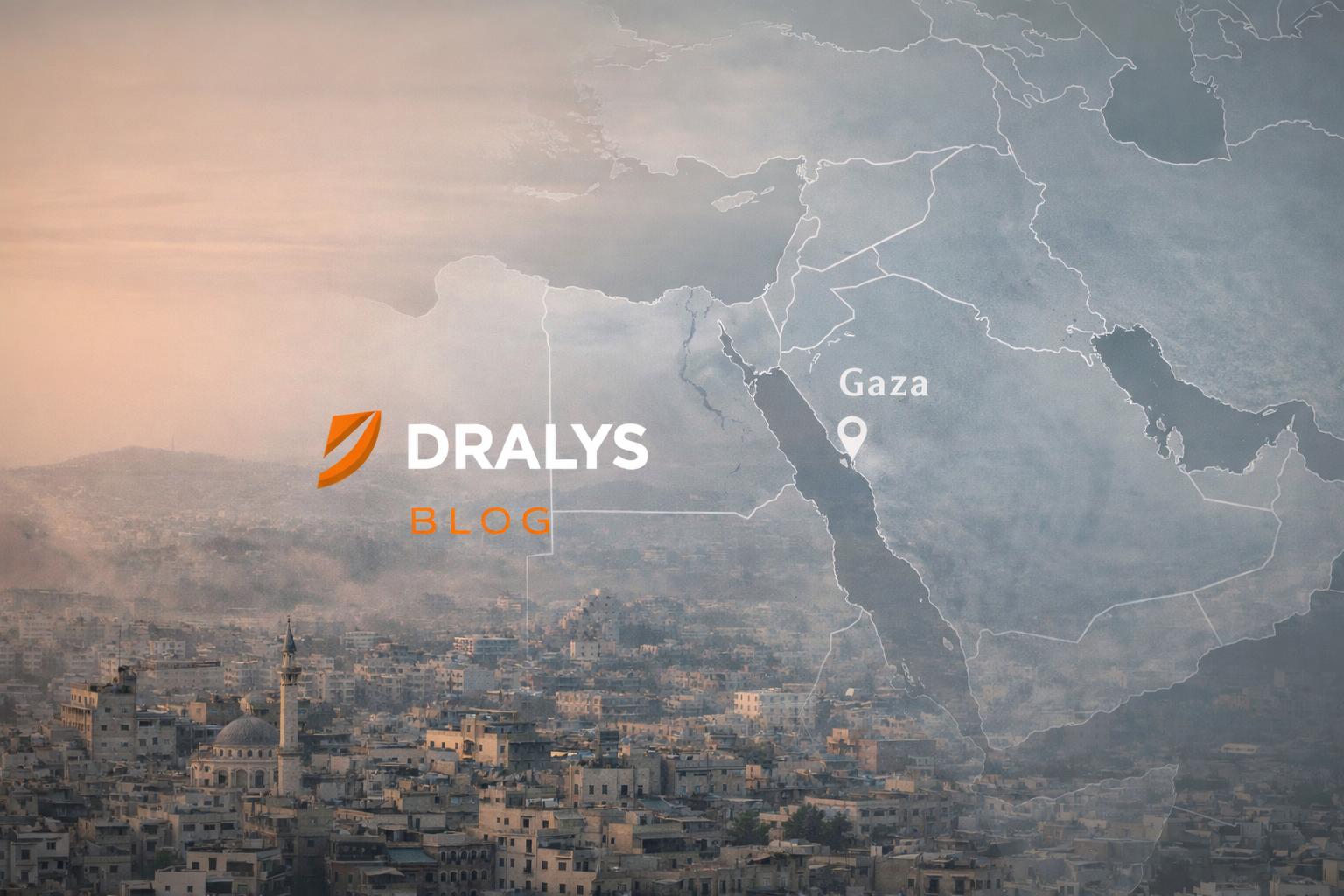
Gaza | Dralys Insight
The war in Gaza has become more than a humanitarian tragedy; it has emerged as a defining moment in the political, ethical, and strategic evolution of the Middle East. Beyond the immediate devastation, the conflict has accelerated shifts in regional power, altered diplomatic alignments, and raised urgent questions about governance, accountability, and the future of international leadership in conflict resolution.
At this year’s Al Jazeera Forum in Doha, policymakers, scholars, and civil society voices focused on how the Gaza war has recalibrated the Middle East’s political landscape. Their discussions reflected a broader global debate: how prolonged conflict reshapes not only borders and institutions, but also public trust in international norms and leadership.
A Region in Transition
The war has intensified existing fractures across the Middle East. Long-standing rivalries have been re-energized, while previously cautious actors have been forced to clarify positions. Public opinion, amplified by digital media, has placed unprecedented pressure on governments to respond not only strategically but also ethically.
In many countries, the Gaza crisis has transformed foreign policy debates into domestic political issues. Governments are navigating a complex balance between security partnerships, economic interests, and public expectations rooted in humanitarian concern. This dynamic has made neutrality increasingly difficult, pushing the region toward a more openly polarized environment.
Gaza After the Fighting
Months into a fragile ceasefire, Gaza remains deeply scarred. Infrastructure destruction, displacement, and economic collapse have left the territory facing a daunting post-war reality. For Palestinians, the challenge is not only rebuilding homes and services, but also restoring a sense of political direction and legitimacy.
This context has fueled discussions about post-war governance. Several proposals have circulated in diplomatic and policy circles, including the idea of a temporary technocratic committee to manage Gaza’s civil administration during a transition period. Advocates argue that such an approach could stabilize essential services and coordinate reconstruction efforts while avoiding immediate factional conflict.
Governance Proposals and Global Involvement
Among the ideas debated internationally is the creation of an oversight framework involving external actors, sometimes described as a “peace board, sometimes described as a “peace board” to supervise Gaza’s reconstruction and governance process. These proposals have been linked, in media discussions, to political figures in the United States, including former president Donald Trump, reflecting broader debates about Washington’s future role in Middle East diplomacy.
The viability of such arrangements remains uncertain. Critics warn that externally designed governance structures risk lacking local legitimacy and may repeat past mistakes if they sideline Palestinian political agency. Supporters counter that international involvement could provide resources, security guarantees, and coordination capacity that local institutions currently lack.
The central question remains: can any externally supported governance model succeed without broad Palestinian consent and regional cooperation?
Competing Perspectives
At the Al Jazeera Forum, diverse viewpoints highlighted the complexity of the moment. Mustafa Barghouti, secretary-general of the Palestinian National Initiative, emphasized the importance of political self-determination and warned against solutions that prioritize administrative efficiency over justice and representation.
From a regional security perspective, Abdullah Al Shayji, a professor of international relations at Kuwait University, analyzed how the Gaza war has reshaped Gulf and broader Arab calculations, particularly regarding alliances, deterrence, and public legitimacy.
Meanwhile, Ziad Majed of The American University of Paris stressed the historical context, noting that post-conflict governance efforts in the region have often failed when imposed from above or disconnected from social realities on the ground.
Together, these perspectives underscored a shared concern: without addressing root causes—occupation, accountability, and political rights no technical or managerial solution can deliver lasting stability.
The Broader Regional Impact
Beyond Gaza, the war has altered how regional actors view international law and global governance. The perceived inconsistency in global responses has deepened skepticism toward existing institutions, while empowering alternative narratives and alliances. This erosion of trust may have long-term consequences for conflict mediation, humanitarian intervention, and multilateral cooperation across the Middle East.
At the same time, the crisis has accelerated innovation in civil society organizing, humanitarian logistics, and digital advocacy. These developments suggest that while formal institutions struggle, new forms of influence and coordination are emerging, often outside traditional state structures.
Dralys Insight: Lessons for Leadership and Governance
- Legitimacy matters more than structure. Governance models cannot succeed without local trust and participation, regardless of technical sophistication.
- Ethics and strategy are inseparable. Long-term stability depends as much on moral credibility as on security calculations.
- Global leadership is being tested. Inconsistent responses to humanitarian crises weaken international norms and invite alternative power centers.
- Reconstruction is not only physical. Rebuilding societies requires political inclusion, accountability, and social healing, not infrastructure alone.
For leaders, institutions, and innovators worldwide, Gaza is a reminder that sustainable solutions emerge when governance, ethics, and human dignity are treated as interconnected, not competing priorities.
Adapted for Dralys Insight from global reports, public discussions, and academic analysis.
Smart shopping starts here.
If you enjoyed this article, explore our curated products designed for everyday living.
📱 Download the Dralys App
🛍️ Shop now: www.DralysStore.com