The State of Leadership in Times of Crisis: Reflections on the Health of Pope Francis
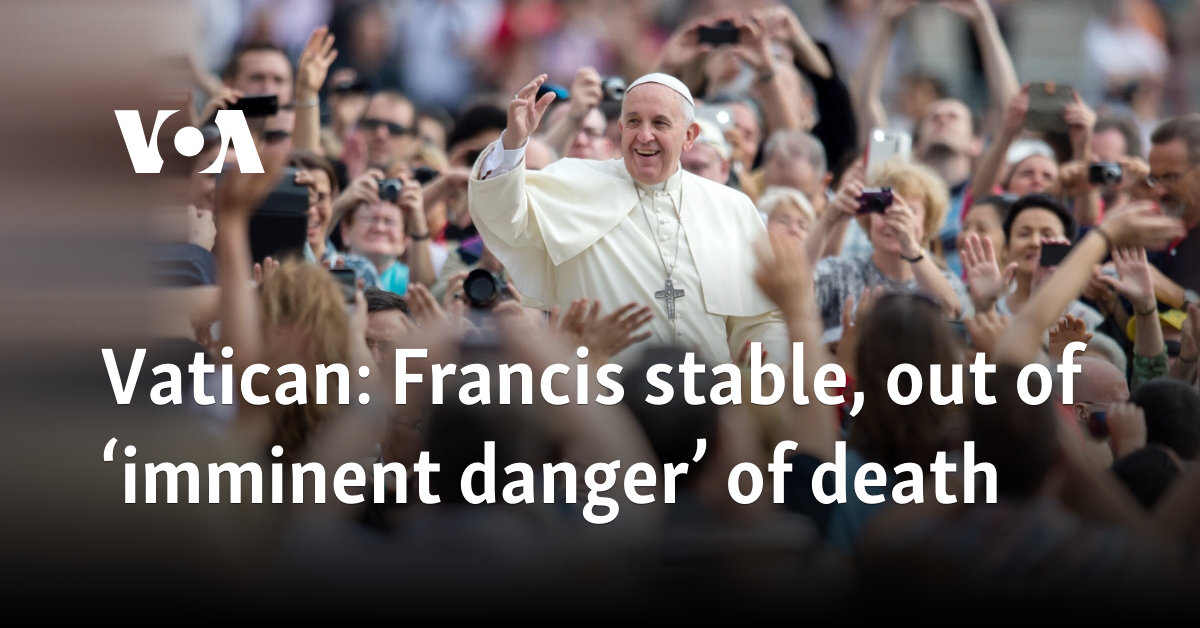
On a recent Saturday, the Vatican provided a significant update regarding the health status of Pope Francis, who remains hospitalized at Rome’s Gemelli Hospital. At 88 years of age, the pontiff’s health has become a concern not only for Catholics but for the global community as well. While the prognosis for Pope Francis remains “complex,” the Vatican announced that he is no longer considered to be in “imminent danger” of death—a statement that ushers in a semblance of relief amid worries about leadership stability within the Catholic Church.
The communications from the Vatican’s Holy See Press Office mark a shift in how health updates regarding the pope will be disseminated. After nearly four weeks of intensive medical care for double pneumonia, the office indicated that future updates would be less frequent unless significant changes in his health occur. The decision to reduce the frequency of updates speaks to the delicate balance between transparency and the need for privacy, particularly as Francis’ recovery takes precedence over sensational news narratives.
The Vatican further emphasized the significance of this transition; the absence of regular updates has been described as “a positive sign” for the Catholic faithful, suggesting that no news can be seen as good news in situations that involve vulnerable leadership. This reflects a broader understanding of governance—not only do leaders need to confront immediate crises, but they must also manage the narratives around their personal health and recovery processes.
As part of his continued treatment, Pope Francis is engaging in motor physiotherapy and using noninvasive mechanical ventilation at night. His health history adds another layer of complexity, given that he had part of a lung removed as a young man due to a pulmonary infection. His recent medical challenges further illustrate the often overlooked ethical aspect of healthcare for leaders—how their health can impact the ethical, moral, and operational decision-making processes within their organizations.
On a poignant note, during this hospital stay, Pope Francis observed the 12th anniversary of his papal election surrounded by healthcare professionals. This moment exemplifies the profound relationships between leaders and their teams, emphasizing the importance of collective efforts in facing adversity. The presence of medical staff highlights their central role, underscoring how the ethics of care, compassion, and teamwork are vital parts of governance, even when the leader is incapacitated.
Compounding this period of recovery, the pope’s hospitalization coincides with Lent, a season marked by contemplation, prayer, and renewal. In many ways, this parallel speaks to the potential for spiritual reflection on the nature of leadership itself. Leaders, akin to the communities they serve, often face trials that call them to demonstrate resilience and strength, with the hope that their values and ethical frameworks guide their decisions and actions.
Society often looks to its leaders in times of crisis. Pope Francis embodies an enduring spirit of empathy and humility, reinforcing the value of societal leadership rooted in ethical considerations. His illness serves as a poignant reminder that vulnerability is a shared human experience, irrespective of one’s position. This situation calls for a profound understanding of what it means to lead; leaders must recognize the intrinsic ties between their well-being and that of their communities.
Moreover, the pope’s experience invites an exploration of innovation within the realm of governance and societal leadership. Appropriately managing health crises among influential figures not only requires robust medical interventions but also an adaptive communication strategy. As the world continues to navigate complexities—whether through political turmoil, health crises, or socio-economic disruptions—the need for innovation in leadership practices becomes evident. The sharing of information, while respecting privacy, is vital for maintaining trust and transparency between leaders and their communities.
Leaders, in whatever capacity they serve, must be innovative and agile, learning to communicate effectively and compassionately within the frameworks of governance they navigate. They can draw inspiration from Pope Francis’s approach—balancing the obligations of leadership while fostering an environment of support, empathy, and ethical responsibility.
As we reflect on the interplay of health, leadership, and ethical governance, it becomes evident that crises often unveil opportunities for innovation and growth.
Dralys Insight
The ongoing health challenges faced by Pope Francis serve as a multi-faceted lesson for leaders in various spheres of influence. Here are key takeaways and opportunities emerging from this circumstance:
-
Communication and Transparency: Leaders must recognize the importance of effective communication, especially during crises. Balancing transparency with the need for privacy can help maintain trust within organizations or communities.
-
Compassionate Leadership: Vulnerability should be embraced as a strength in leadership. Demonstrating empathy in difficult times builds stronger connections and fosters trust among followers.
-
Ethical Considerations in Healthcare: The implications of a leader’s health are profound; a thoughtful approach to healthcare is essential. Societal leaders must advocate for comprehensive care strategies that prioritize both leadership efficacy and personal well-being.
-
Resilience and Innovation: Crises are fertile ground for innovation. Leaders must adapt communication and operational strategies to remain effective and responsive to change.
-
Community Interconnectedness: Recognizing the collective experience of hardship during crises creates a sense of unity. Leaders should actively foster environments that promote support, collaboration, and shared values.
In essence, the reflections on Pope Francis’s situation illuminate the critical dimensions of leadership: the intersection of health, ethics, governance, and innovation in navigating challenges effectively.
Adapted for Dralys Insight from global reports and public sources.
Smart shopping starts here.
If you enjoyed this article, explore our curated products designed for everyday living.
📱 Download the Dralys App
🛍️ Shop now: www.DralysStore.com